

Public sector communications rarely have a true “slow season.”
One month, your team is promoting summer programs and community events. The next, you’re preparing severe weather information, announcing holiday closures, recruiting volunteers, promoting public meetings, or trying to explain a new program in a way residents will actually understand.
Add unexpected announcements, leadership requests, emergencies, and everyday operations, and even a well-staffed communications team can quickly become reactive.
For smaller municipalities, public agencies, and community organizations where communications may be one of several responsibilities assigned to the same employee, the challenge can be even greater.
That’s why annual communications planning matters.
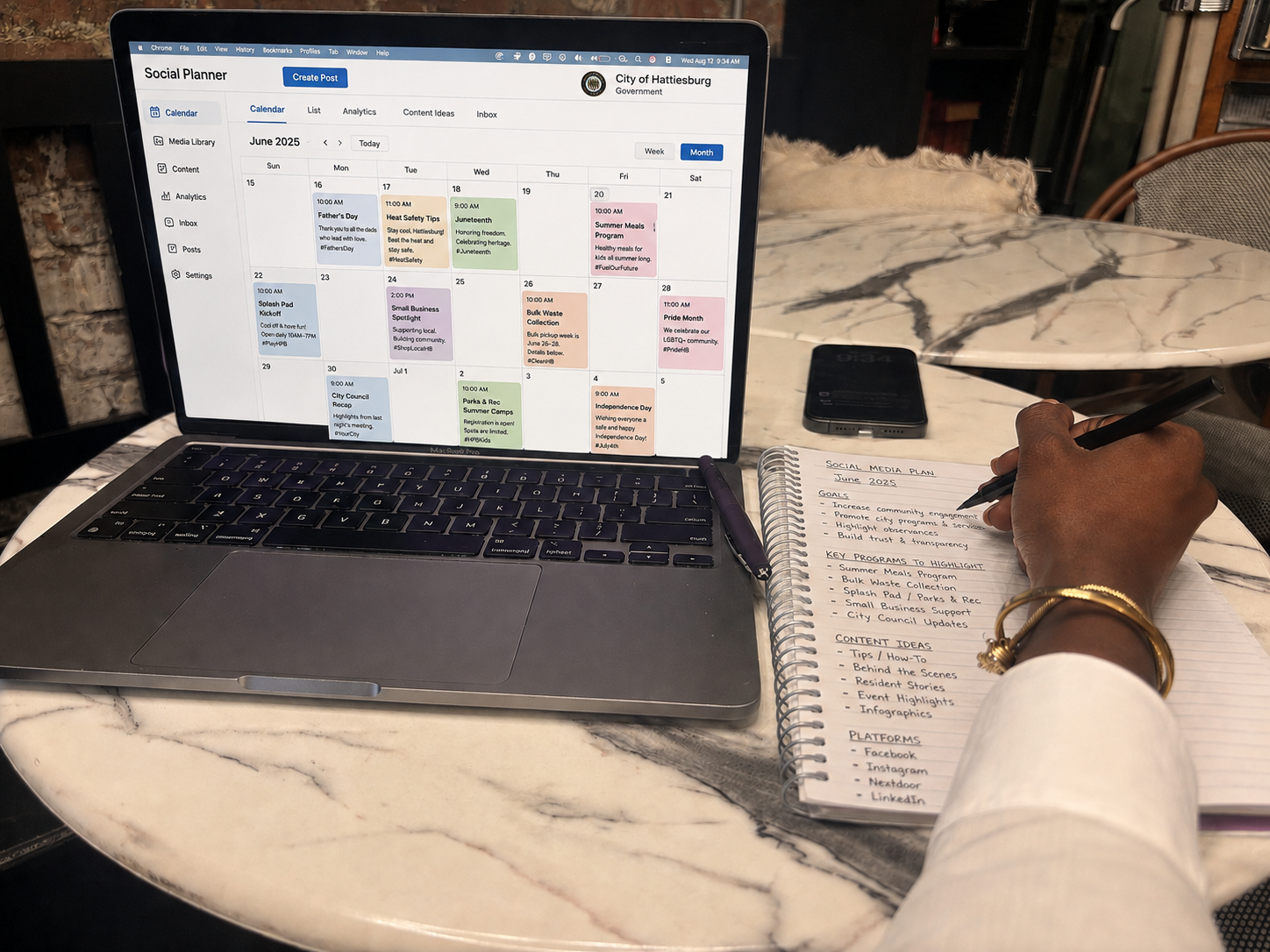
A yearly communications plan doesn’t mean writing every social media caption 12 months in advance. It means identifying what you already know is coming and building the messaging, graphics, templates, and processes you’ll need before everything becomes urgent.
1. Start With What Happens Every Year
Before brainstorming new campaigns, look backward.
What did your organization communicate about last year?
Depending on your agency, your annual calendar might include:
- Budget hearings and public meetings
- Holiday closures and service changes
- Severe weather and emergency preparedness
- Parks and recreation programs
- Summer camps and youth programming
- Community festivals
- Public works projects
- Elections and voter information
- Public safety campaigns
- Seasonal hiring
- Small business or economic development programs
- Annual reports
- Board or council meetings
If it happened last year and will probably happen again, it belongs on your communications calendar.
This exercise also helps identify evergreen content—communications that can be created once and updated instead of redesigned every year.
For example, your annual Veterans Day closure graphic probably doesn’t need an entirely new concept every November. Neither does your summer camp registration announcement.
Build the framework once. Update the details later.
2. Plan Around Programs, Not Just Social Media
One of the easiest communications planning mistakes is creating a social media calendar instead of a communications calendar.
Your audience isn’t necessarily following every government Facebook page.
For each major program or initiative, ask:
Who needs this information? Where are they most likely to receive it? What action do we need them to take?
A community program might require a webpage, an email announcement, social content, a digital flyer, printed materials, partner outreach, a media pitch, or all of the above.
Planning at the campaign level helps your organization communicate consistently across channels rather than treating each Facebook post, email, flyer, and website update as a separate project.


3. Build Your Reusable Assets Early
Once you’ve identified recurring programs, determine which materials can be
standardized.
That could include event templates, public meeting graphics, emergency information templates, newsletter layouts, social graphics, press release formats, presentation templates, flyers, website banners, and email designs.
A reusable library doesn’t mean every communication should look identical. It means your staff isn’t staring at a blank Canva file every time something needs to go out.
This is also where good brand standards become practical rather than decorative. Templates help different departments and employees maintain a recognizable visual identity—even as staff members and responsibilities change.
4. Build Accessibility Into the Planning Process
Accessibility shouldn’t be something your team tries to fix after content has already been created.
This is particularly important for public entities.
The U.S. Department of Justice’s Title II web accessibility rule establishes WCAG 2.1 Level AA as the technical standard for state and local government web content and mobile apps. Following a 2026 extension, current compliance dates are April 26, 2027, for public entities serving populations of 50,000 or more and April 26, 2028, for smaller entities and special district governments.
That makes annual planning a good opportunity to consider accessibility across your website, documents, graphics, videos, and digital communications rather than treating accessibility as a one-time website project.
The DOJ specifically recommends that public entities inventory their web and mobile content, prioritize what needs to be addressed, review vendor relationships, and develop policies as part of their preparation.
Review the DOJ’s guidance for state and local governments

5. Leave Room for the Things You Can’t Plan
Here’s the catch: government communications will never be completely predictable.
And your calendar shouldn’t pretend otherwise.
Weather happens. Projects get delayed. Leadership priorities change. A program suddenly receives funding. Something goes wrong on a Tuesday morning and your carefully planned afternoon is gone.
Annual planning actually makes those moments easier.
When routine communications are already organized, your team has more capacity to respond to the unexpected.
Instead of scrambling to create next week’s recurring program materials while simultaneously managing an urgent announcement, you’ve already handled some of that workload.
Think of your annual plan as a framework—not a cage.
6. Review Quarterly Instead of Waiting Until Next Year
A yearly communications plan shouldn’t sit untouched for 12 months.
Set a quarterly check-in to review:
What’s working? What changed? What can we reuse? What should we stop doing?
Look at website traffic, email performance, social engagement, event participation, resident questions, partner feedback, and other indicators relevant to your goals.
And don’t measure everything by likes.
If your goal was getting residents registered for a program, registrations matter more than impressions. If your goal was increasing awareness of a new service, website visits, calls, inquiries, or applications may tell you more than follower growth.
The goal is to make next quarter’s communications smarter than the last.
Your Communications Calendar Should Make Your Job Easier
Annual communications planning isn’t about creating more content.
It’s about reducing unnecessary work.
When recurring campaigns are identified early, assets are reusable, responsibilities are clear, and your organization has a consistent process, your communications team can spend less time recreating materials and more time thinking strategically about how to reach the people you serve.
And you don’t necessarily have to build all of it yourself.
Plan It Once. Use It All Year.
Lewis & Florence Communications offers Yearly Communications Packages designed for nonprofits, public agencies, and organizations with recurring programs but limited communications capacity.
Instead of starting from scratch every month, we can help develop a year’s worth of reusable, branded communication assets around the events, programs, observances, and initiatives already on your calendar.
Depending on your organization’s needs, packages can include social media assets, email communications, website banners, SMS messaging, newsletters, landing pages, calls to action, and other reusable campaign materials.
You keep control of your communications. We help build the system behind them.
Not sure what your organization needs yet?
and tell us what’s already on next year’s calendar. We can help you identify what can be planned, standardized, and built in advance.
ments and public agencies can build an annual communications plan, create reusable content, improve accessibility, and reduce last-minute work.